


Flats Fishing Primer - Florida

How to Fish the Florida Flats:
Flats fishing is all about reading shallow coastal water before you ever make the cast. Tides, water temperature, wind, light, fish behavior, stealth, skiff positioning, tackle choices, and even how you approach a flat can determine whether fish stay put or leave town.
This Flats Fishing Primer – Florida is a practical guide for anglers learning how to fish shallow coastal water. It brings together the basics of tides, water temperature, fish behavior, stealth, skiff positioning, polarized sunglasses, tackle choices, and on-the-water awareness to help newer flats anglers build confidence, shorten the learning curve, and fish smarter.
Flats Fishing Primer - Florida rewards anglers who pay attention before they ever make a cast. This primer brings together practical shallow-water fishing tips on tides, water temperature, fish behavior, stealth, skiff positioning, tackle, and on-the-water awareness to help newer flats anglers build confidence and fish smarter.
Last reviewed and updated by Flats Nation: September 2026
This subject comes up often through reader questions, emails, and conversations, so it made sense to combine those thoughts into one working primer. We can update this article over time as new basic tips come in, while building on other Flats Nation guides and insight to help newer members of the sport become more successful in less time.
Situational Awareness on the Flats:
Reading the Water Before You Cast:

Water temperature is one of the most important factors affecting fish behavior; they can detect small changes and react as needed for survival. At one time, I had a water temperature gauge on my console running all the time; now, it is always showing on my SIMRAD screen. I am looking for cooler water in summer and winter, naturally, warmer water, even if just a few degrees. Warmer water in the Winter like that which is on, or the tide has moved onto dark grass patches or mud bottom, holding up the surrounding water temperatures, even if just a few degrees, attract more fish. They are cold-blooded animals, so think of water temperature like a throttle for an engine.
High-Pressure System Fishing. If I had a dime for every time I heard that "Fish feel atmospheric pressure, that is why fishing in High-Pressure weather conditions is so difficult," I could retire already... 🙄 Fish do not directly feel atmospheric pressure in millibars the way it is often described in fishing folklore. Atmospheric pressure is transmitted through the water, but the practical effect of normal barometric changes on a fish sitting in shallow water is very small compared with changes caused by depth, water movement, temperature, wind, light, and current. Goes to show (they) did not take the same engineering classes that I and many others did. Goes to show they may not have taken the same engineering classes many of us did. For practical purposes, liquids are essentially incompressible — otherwise the hydraulic brakes on your truck would be having a very bad day and not work.
They do, however, experience major pressure changes as they move through the water column. That is why fish brought rapidly from deep water can show signs of barotrauma as gases within the swim bladder expand and sticking out when pulled up very quickly from deep water. For most Flats Fishing, though, this aspect never comes into play since, most of the time, you are fishing in the top twenty feet of water as it is... What those weather conditions can and do bring is winds and clearer skies in many cases. The increased amount of light (something fish cannot adjust for as we can) and winds moving and stirring up the water can and do make fish move. Maybe better stated, as creatures of habit, we all tend to return to spots where we last caught fish. And that is a logical place to start IF those same conditions (pattern) are present? But, be prepared to move and start scouting for fish since they have tails and move around quite a bit to find conditions better suited for them to thrive.
I am not all hung up on tides as many are... I fish when I can and look for water movement that helps bring the fish a meal. Whether it is a rainbow trout in a clear mountain stream or a seatrout waiting along the edge of a grass flat for dinner to come to them, fish will often position themselves into the current, waiting to strike.
I use low tide conditions for slow visual scouting since I can see the bottom structure such as grass, oyster beds, or small channels then use an incoming tides to float into such areas when possible. An excellent tool (TidesPro) that will help with reading the Tides and Trip planning can be found by clicking Here
Google Earth saves me time and fuel when scouting new flats to fish. I look for points, oyster beds, tidal creeks, cuts, and other structure in areas I want to explore. With latitude and longitude coordinates, I can zero in on promising spots ahead of time or keep an image handy while drifting or working through a new area with the trolling motor.

Remember to look for Ambush Points, including docks and points. Many flats fish are ambush feeders, with Reds being noted as the ones that "actively" search out food and follow Mullet schools much more than the others.
A quality pair of Polarized sunglasses, a "face and neck shield," and a cool ball cap or visor to help stop light from leaking into the top and sides of your face are critical. This also helps prevent sun and wind burns even durning the winter.

Birds feeding - or just standing in specific locations - can tell me a lot. I have watched Fish and Birds work together to press the bait towards each other and feed. What is that old saying when the Man was asked, “How did you catch all those fish? His reply was simple, “A little Bird told me…” 😉
Find a safe way to get Elevated on your front casting deck so you can see farther and spot fish sooner.

Or a stable cooler with non-slip rubber feet can also provide a little extra height, provided it is designed to support your weight and cannot slide around on the deck.
This “high ground” viewing concept also applies to kayaks and other paddle craft when conditions and the vessel allow you to stand safely. Those boats can reach shallow areas that even some skiff anglers wish they could access. More on flats and backcountry fishing from paddle craft soon.
Speaking of being elevated, and moving around as little as possible, it always helps to blend into the background color — whether that means sky blue, white or gray on cloudy days, or even mangrove green.
Some may try and argue that blend in color aspect and that is Okay! But, have you ever stopped and thought about wading bird colors? Do you think the white on Egret or Heron helps them blend into the background/clouds above them?
How about a quick visual reminder on the use of Camouflage on the subject? And yes, side on and from our viewing angle, they can stand out like a Bull walking through downtown Miami. 😊 To a fish looking upward, however, the background, light, angle, and lack of movement can completely change what that silhouette looks like.


As denoted in the "Yes, they can see you moving" article, here is an example in which it is very low light, and the fish are leaving town (look bottom right) even with the Osprey flying way above them!

What is that old saying, “To understand the owl, study the mouse”? The same idea applies here. Learn where the prey is, understand what it is doing, and the predator is usually not far behind. 😉
Stealth is the key, and every little measure helps. On many flats, that means shutting down early and poling or wind-drifting into position. Fish in skinny, clear water are extremely alert. Those birds above have been putting pressure on them since they were little fry..
You can talk all you want, but open music playing, gear falling on the deck, sudden trolling-motor speed changes, dropping an anchor over the side, bilge pumps cycling on and off, and even sonar transducers buzzing away in a foot of water can all send fish scattering like a covey of quail. That is one reason I prefer earbuds when I want music on the water.

Flats Fishing Tackle and Presentation
Fluorocarbon leaders — I typically use about three feet of leader along with loop knots, which helps keep the presentation below the surface. Monofilament and its related leader materials also have some stretch, which can help absorb the shock of a hard strike and reduce the chance of throwing the bait during the fight.
Many freshwater and bass lures will work just fine on the flats. A fish is still a fish. Match the profile and movement of the local forage — both baitfish and shrimp — and you can get strikes. I have several bass crankbaits that I have modified when needed with stronger hooks, and they work very well in these conditions.
I especially like the now discontinued Mann’s Baby 1-Minus lures. At times, I remove the front hook so I can work them more easily around oyster bars. If one does get hung on shell, I stop reeling and give the floating lure a chance to rise off the oyster before starting again.

In my experience, the three-dimensional profile and action of crankbaits can outperform a traditional gold or silver spoon in the same water. They can also be worked more slowly when needed, which helps keep them above grass and other types of cover.
Another unique hard-bait modification for topwater fishing — with a sneak peek below — can be found in our article on modifying topwater lures.

Both presentations let you cover a lot of water quickly and effectively, which is often exactly what you need when searching for fish.
Swimbaits also work very well around grass flats and other types of structure. You can read more about that technique in our article on fishing swimbaits on the flats.
I also apply a little scent to some lures, if for no other reason than to help mask human or other non-bait odors such as plastic, glue, or sunscreen transferred from your hands. How many times have you watched a fish get within a few feet of your offering and suddenly turn away?
Sunscreen is not something you normally season your shrimp with for dinner, so why expect a fish to like it either? 😉

Ongoing Education
One book I highly recommend for understanding the predator-to-prey relationship — and how it changes throughout the seasons — is The Orvis Guide to Fly Fishing for Coastal Gamefish by Aaron Adams.
Do not be fooled by the title. Anglers of all kinds, not just fly anglers, can learn a great deal from this book because understanding how fish find, follow, and feed on prey applies no matter what you are casting.

You can read more about the book and order a copy through our link to The Orvis Guide to Fly Fishing for Coastal Gamefish
Again, this article is intended to be a primer on flats fishing. Most anglers do not start out chasing tarpon with a fly rod, and we will get to those subjects in greater detail elsewhere.
The Flats Nation Team will add to these basics as needed, but we wanted to give anglers a good starting point for most Flats Fishing in Florida — with other areas planned — without necessarily having “Fish on the Dark Side” by using live bait. 😊
The podcast episode below with Captain Tommy Derringer, is a great companion to this primer. Tommy covers flats fishing in Northeast Florida and other locations exceptionally well, with plenty of practical tips and tactics from years on the water.
And, of course, Brother Tommy is only one of the guides and industry voices featured across Flats Nation. Our podcasts and media coverage span different regions, techniques, boats, gear, and other topics from across the flats fishing world, with more guests and product coverage on the way.
In the meantime,
Listen to more Flats Nation Podcast Episodes when you need to “scratch that fishing itch” but cannot hitch up the skiff and go.
Visit our Flats Nation Media section for Podcasts, Sound Bites, Flats Nation Updates, and other audio and video coverage in one place.
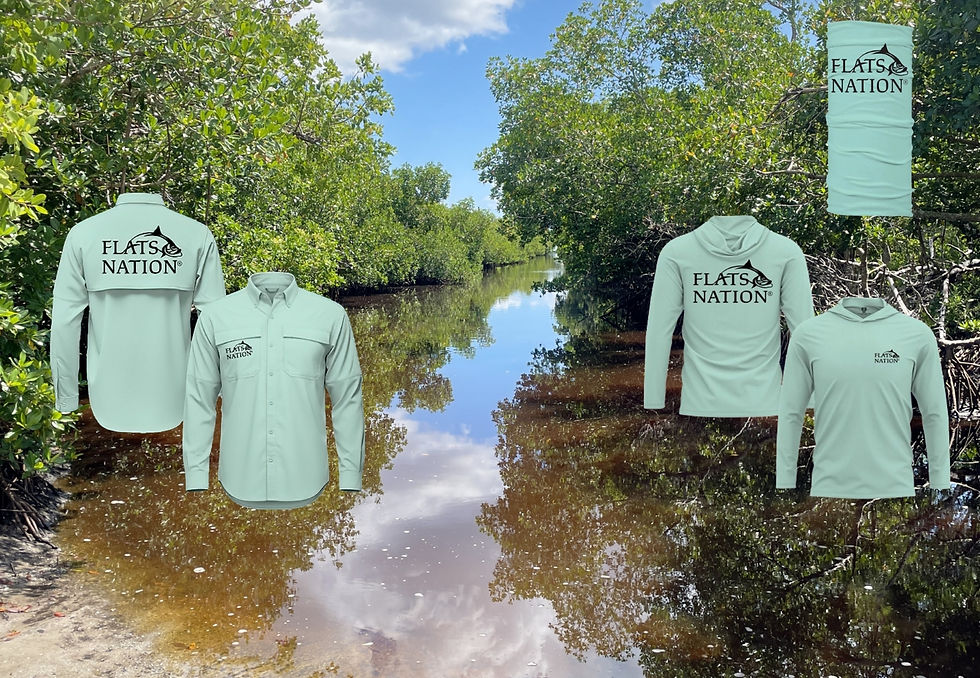
And if you are looking for something to wear on the water or around town, you can also explore the Flats Nation Merch & Swag collection.

Tight Lines, and God Bless!
Dave and the Team


